
Hyperpigmentation Treatment Leicester
Treat dark spots, sun damage and freckles for a clearer, even-toned complexion with clinically proven, personalised care.
5.0120+ reviews
4.7140+ reviews
About This Condition
What Is Hyperpigmentation?
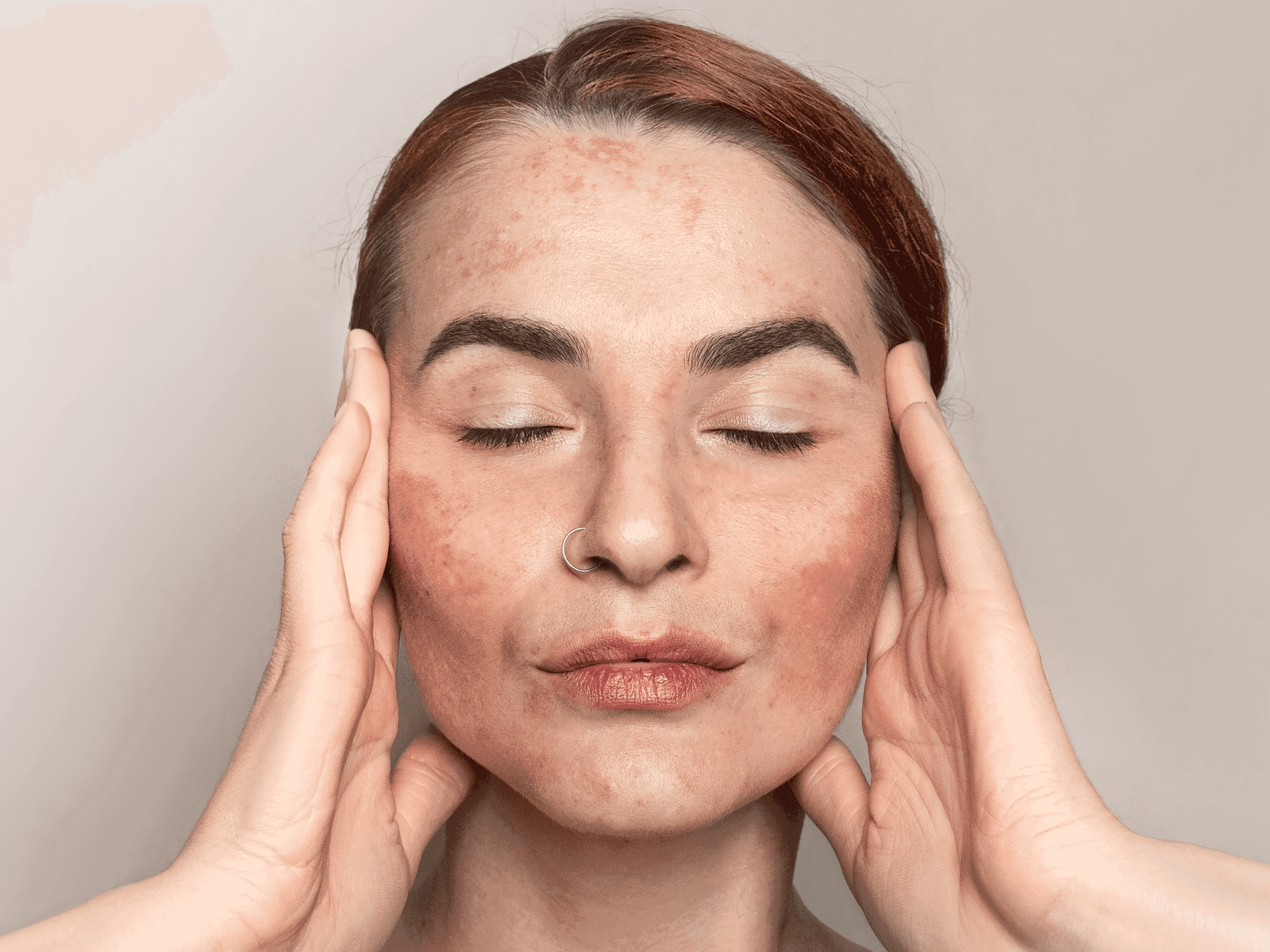
Hyperpigmentation is the darkening of areas of skin caused by an excess production of melanin , the pigment responsible for skin colour. It encompasses a broad range of concerns including sun damage, age spots, freckles, melasma, and post-inflammatory marks, and can affect the face, hands, neck, or body.
Although largely harmless, these concerns are a common source of self-consciousness. With the right professional treatment, most forms of hyperpigmentation can be significantly reduced or cleared, restoring a clearer and more even complexion.
Classification
Types of Hyperpigmentation
Melasma
Hormonally triggered, symmetrical patches of deeper pigmentation typically appearing on the cheeks, forehead, and upper lip.
Post-Inflammatory Hyperpigmentation
Dark marks left behind after acne, injury or inflammation as the healing skin overproduces melanin in the affected area.
Solar Lentigines / Freckles
Sun-induced flat spots that develop on exposed skin such as the face, hands, and shoulders from cumulative UV exposure.
Root Causes
What Causes Hyperpigmentation?
Understanding what contributes to dark spots and uneven skin tone helps identify the right treatment approach for long-lasting results.
Sun Exposure
UV radiation triggers excess melanin overproduction, leading to sunspots, freckles, and broader areas of darkening on exposed skin.
Hormonal Changes
Pregnancy, the menopause, and the contraceptive pill can trigger melasma, causing symmetrical patches of deeper pigmentation on the face.
Post-Acne Scarring
Skin trauma from acne breakouts triggers excess melanin production during healing, leaving behind persistent dark post-inflammatory marks.
Skin Trauma or Inflammation
Cuts, burns, eczema, and cosmetic procedures all disrupt normal melanin distribution, resulting in patches of uneven discolouration during repair.
Genetics
Some people are genetically predisposed to freckling or melasma, with inherited melanocyte sensitivity amplifying pigmentation responses to UV and hormones.
Certain Medications
Some antibiotics, anti-seizure drugs, and chemotherapy agents increase photosensitivity, making skin far more prone to developing pigmentation changes.
Risk Factors
Who Is More Likely to Develop Hyperpigmentation?
Several skin types, lifestyle habits, and health factors increase susceptibility to hyperpigmentation and sun damage.
- Those with frequent or prolonged unprotected sun exposure.
- People with darker skin tones who are more prone to post-inflammatory marks.
- Women on hormonal contraception or during pregnancy.
- Those prone to acne, eczema, or inflammatory skin conditions.
- Individuals with a history of skin inflammation or repeated skin trauma.
- People with a family history of melasma or hyperpigmentation.
Our Process
How Do We Diagnose Hyperpigmentation?
Our specialists use a multi-step assessment to understand your skin:
Wood's Lamp Skin Analysis , a specialised UV light that reveals the depth and distribution of pigmentation invisible to the naked eye.
Dermatoscopy & Visual Assessment , close examination of pigmented lesions to characterise their pattern, border, and severity.
Skin History & Trigger Review , a thorough discussion of your lifestyle, sun habits, hormonal history, and skin concerns to identify root causes.
Your Options
Treatments For Hyperpigmentation & Sun Damage
Lumecca IPL
Intense Pulsed Light precisely targets excess melanin, breaking down sunspots, freckles, and areas of uneven pigmentation for a noticeably clearer complexion.
Chemical Peels
Exfoliating peels remove pigmented surface skin cells, accelerate cell turnover, and progressively lighten dark patches and uneven discolouration.
Laser Resurfacing
Targeted laser energy penetrates deeper pigmentation, stimulating cell renewal and collagen production to reduce sun damage and uneven skin tone.
AlumierMD Skincare
Clinically formulated brightening skincare that inhibits melanin production and supports a clearer, more even complexion between clinic treatments.
Medical Advice
When to Call a Doctor?
Most forms of hyperpigmentation are harmless. However, you should see a doctor if you notice:
- Rapidly changing spots that grow in size, colour, or number.
- Asymmetrical growth or irregular, poorly defined borders.
- A pigmented lesion that bleeds, crusts, or fails to heal.
- New significant pigmentation appearing after the age of 40.
What To Expect
Results & Expectations
After treatment for hyperpigmentation and sun damage, here is what you can typically expect at each stage.
Treatment Timeline
Most patients see meaningful improvement within 4 to 8 weeks across a course of treatment sessions.
Gradual Fading
Sunspots, freckles, and post-inflammatory marks continue to fade as the skin renews and melanin disperses.
Maintenance & SPF Protection
Daily broad-spectrum SPF and periodic maintenance treatments sustain a clear, even complexion over time.
Meet the Experts

Dr Sumit Virmani
MBBS, MRCGP
Co-Founder & GP
Dr Sumit Virmani is co-founder of The One Clinic. He has extensive experience having worked as a medical doctor for over 15 years, with over 12 of these years working as a local GP.
View Full Profile
What Our
Customers Say
Don't just take our word for it. Here's what real patients have to say about their experience at The One Clinic.
Why Us
Why Choose The One Clinic For Hyperpigmentation Treatment
All-in-one clinic with medical & aesthetic services.
Highly trained, compassionate doctors.
Customised treatments based on listening & expertise.
State-of-the-art facilities & modern equipment.
Strong reputation & excellent reviews.
Comprehensive care and referrals with specialists.
FAQ
Frequently Asked Questions
Hyperpigmentation is an umbrella term for any darkening of the skin caused by excess melanin. Sun damage refers specifically to discolouration caused by UV exposure, including sunspots and age spots. Freckles are small, concentrated deposits of melanin, often genetically inherited but intensified by sun exposure. All three share the same underlying mechanism and respond well to similar treatments.
Many forms of hyperpigmentation can be significantly reduced or cleared with the right treatment. IPL and laser are highly effective for sunspots, freckles, and age spots. However, melasma and post-inflammatory pigmentation can recur without ongoing sun protection and maintenance. Our doctors will advise on the most appropriate plan for your skin type and pigmentation pattern.
The number of sessions depends on the type, depth, and extent of the pigmentation. Sunspots and freckles often respond well after one to three IPL sessions. Deeper or more widespread hyperpigmentation may benefit from a course of chemical peels or combined treatments. Your doctor will outline a personalised plan during consultation.
Yes, with the right treatment selection. Some lasers and IPL devices carry a higher risk of post-inflammatory pigmentation in darker skin tones if used incorrectly. At The One Clinic, our doctors assess your Fitzpatrick skin type and choose treatments that are both safe and effective for your skin.

Take the First Step
Ready for Clearer, More Even Skin?
Talk to our specialists today to find the most effective treatment for your pigmentation and restore a naturally radiant complexion.
Contact Us
Get In Touch
Reach us by phone, email, or visit us at the clinic. You can also follow us on social media for the latest treatments, patient results, and wellness tips from our team.
Explore